Showing posts with label football. Show all posts

Monday, 13 January 2014

"I really wanted an autograph": The story of how a Manchester United fan got to work with his heroes when they visited Sydney last year

A medical student at the University of Sydney, Zarshis Avari was part of the medical team that was attached to Manchester United when they travelled to Australia for their pre-season preparations last summer.

Zarshis has been supporting Manchester United for the last ten years, but he's wearing a frown while speaking about them now.

He's speaking to me a day after Sunderland beat the Red Devils at the Stadium of Light in the first leg of the Capital One Cup semi-final, but that United have suffered three defeats on the bounce does not dampen his enthusiasm when he tells me about what he did last summer.

Zarshis Avari, medical student and
Manchester United fan.
Reproduced with permission

How it happened


Although he now cherishes the week he spent with the United players and staff, his time with the 21-time Premier League champions happened by chance.

"It was a part of my Independent Learning Assignment (ILA)," he recalls "I went to the Sports Science Association and I asked the receptionist, 'can I see any doctor who's available and who can take me in for a week or two?' 

He walked in to the association building about three months before United came calling. For legal reasons, Zarshis does not wish to name the doctor who'd organised this for him.

The doctor said 'I'm going to be busy for the next three to four weeks because a team from England is coming to play in Sydney and I will be their physio while they're in Sydney.'

'Which team are we talking about here?' was Zarshis' next question, because he - rabid fan that he is - knew United were coming to Sydney.

"He didn't even know the name of Manchester United and he looks at his phone," recalls Zarshis, giving me the same wide-eyed stare he gave this doctor when he came to know that he was going to be working with United.

His love for United


"I just go, 'look, please, can I please please please please (four pleases) do my ILA with you on this topic because I'm a big, big fan and he straight away pointed out that being a fan, it's not a good thing because you have to keep your opinion and your profession separate," he recalls.

This was a chance that most football fans would give anything to be part of, and Zarshis had to promise to be on his best behaviour when the team did come to Sydney if he was to convince this doctor to let him work with him.

Lookie, lookie! From left to right: Manchester United's Anderson Oliveira, David de Gea, Rafael da Silva and Patrice Evra along with two members of the coaching staff at the $1000 a night Park Inn hotel where the players stayed.
Reproduced with permission
A month later, Zarshis was given his entry pass, but it came with strict conditions.

"No autographs, no photos, no handshakes," is what the doctor told Zarshis. "You'll be tailing me, you'll only be with the players while I'm there."

Fan that he is though, Zarshis went to see his childhood heroes disembark at Sydney International Airport and was even able to take a few photos of them.

"I always thought I wouldn't have much of a reaction because I'm that kind of guy but seeing the legends like Ryan Giggs and Paul Scholes, that was huge," he recalls.

But when he joined up with the team the next day at the Kogarah Stadium, he remembers having to restrain that emotional side of himself.

Staying grounded


"When I was with the team, it was hard," he says. "I was thinking about the goals that (Wilfried) Zaha has scored or the goals that Ryan Giggs has scored, I was thinking about the FA Cup (semi-final) against Arsenal.


"Sometimes I would tend to forget what I had to do so I would just stare at the player in a blank fashion. The player would know what was going on because they've seen that reaction a lot of times."

"I really wanted an autograph!" he adds wistfully. "I was even thinking of sneaking in but my professional side told me 'you might get thrown out'."

One of the tests Zarshis remembers doing on the players was a knee exam on Patrice Evra, but a few musculoskeletal tests aside, he spent most of his time tailing his physio.

On the 20th of July, Zarshis added to that experience when he watched his beloved team play live for the first time at the ANZ Stadium. The pre-season friendly between United and the Australian A-League All Stars ended in a thumping 5-1 win for the visitors.

Fond memories: Zarshis' photo of the two teams lining up in the ANZ Stadium at the Sydney Olympic Park ahead of their pre-season friendly. United won 5-1 with a brace apiece from Danny Welbeck and Jesse Lingard, with Robin van Persie also scoring. Reproduced with permission
During their stay in Australia, the United players hosted several autograph-signing sessions but Zarshis could not attend them because in addition to working with the team, he still had to attend lessons and prepare for his exams.

"I had an exam the week after, so I could really take time out to go to the Kogarah stadium to meet the players," he says.

Unfortunately, Zarshis has had  to look for another ILA, which he tells me has already been secured: because his time with the team was so short, it did not count towards the completion of his ILA.

Truth be told, I don't think he really minded. "It was an amazing experience, just seeing the players in real life," he gushes.

"Working with them, it's going to go on my CV and I'm betting it's going to impress a few employers."

Thursday, 9 January 2014

I wouldn't trade my World Cup experience for anything, says Chuck Martini

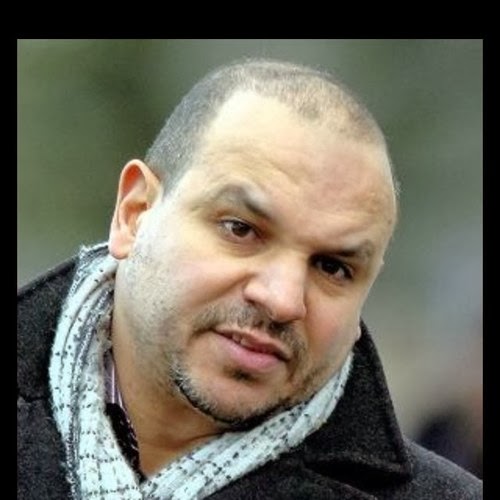
Former Morocco goalkeeper Chuck
Martini.
Image courtesy: Twitter
Former Morocco goalkeeper Chuck Martini says that he would never trade his World Cup experience for anything else in the world.

Martini, who is currently the Head Coach of the Muscat Football Academy in the Sultanate of Oman, was called up to represent Morocco at the 1994 FIFA World Cup held in the United States.

"To see all these stars and to see all these household names competing for the greatest prize in world football, of course it's an honour and a fabulous experience," says Martini, who had stints with Leicester City, Wimbledon AFC and Wycombe Wanderers in the UK.

But despite being at the World Cup in the US, Martini's one regret about his time at the World Cup was that he never got to play in it.

"The only disappointing factor is I didn't get no minutes," he says with a laugh. "I was judging it from the bench. 

"I wouldn't have swapped the world for that experience," he adds. "Obviously I would have loved to have tasted it and playing out there in front of the many thousands and the many millions who were watching it on TV but I wasn't to be and it was never to be in terms of a World Cup. 

Blessed

"I feel blessed that I played professional football, that I was able to represent my national side on a few occasions and it's a massive honour and it's something that I will take to my grave," says Martini, who despite moving to Britain at the age of three, chose to represent his birth nation of Morocco.


Martini received four caps for his country and vividly remembers the emotions associated with his début, a 2-1 win over Gabon.

"I remember how terrified I was," he says. "The reason why I was terrified, I was just thinking 'I'm a
goalkeeper and I just don't want to make a mistake.

"I don't think you feel a sense of pride at the time. You're more nervous about not letting the nation down.

"You don't want to mess up otherwise you don't get the opportunity to play again," he adds. "With a club sort of thing, you can make a mistake, it's only your club.

"But when you make a mistake and it's your country, and people are writing bad things about you, you don't want to picture that."

"I remember, I was nervous until I touched the ball the first time, and then your adrenaline kicks in and it's all about the game," he says.

Club versus Country debate


But despite the honour associated with playing for one's country, the reason clubs are reluctant to let players leave is because they are afraid their players will get injured and hamper their teams.

"Clubs are paying [their] players a fortune and they don't want [them] to go and play in a game that could see [them] get injured, with realistically no real compensation because FIFA rules state that when a national team calls their player(s), they have to go," he explains.

The concern there, he adds is that injuries that players pick up will severely dent a club's hopes of capturing silverware.


"Also, the club look at it from a perspective of business, you know, 'we're paying him so much money, there is no need for him to turn up to an exhibition match'.

"Yes, obviously, [for] World Cup Qualifiers, South American Qualifiers, African Nations Qualifiers, European Qualifiers, fine, but friendlies, they then think 'well no there's no reason for us to be letting our players go, especially our main, core players' and I can understand that," finishes Martini.

"I do not believe the Premier League has any bad managers" - Chuck Martini

Former manager Chuck Martini has said that there are no bad managers in the Premier League as taking over a team in the top-flight of English football requires in-depth knowledge of the game.

Chuck Martini, Head Coach, Muscat
Football Academy
Reproduced with permission
"I do not believe the Premier League has any bad managers. They wouldn't be in that league if they were bad managers," says Martini, who coached Southern League Division One side Godalming Town FC and Ryman Division One team Walton and Hersham FC in the UK.

"They're proven to be managers. People like Mark Hughes who've been sacked in the past, look, every manager will eventually get the sack.

Devastating


"The Premier League is big business," he explains. "The difference between being in the Premier League and being in the Championship, it is absolutely devastating to a football club.

The most recent manager to get the sack was Scotsman Malky Mackay, who was dismissed after a protracted stand-off with Cardiff City owner Vincent Tan during which time he was told to either resign or face the sack by Tan.

Mackay has since been replaced by former Manchester United legend Ole Gunner Solskjaer.


"There are chairmen out there that are footballing people," says Martini, a member of the League Managers' Association.

"I wouldn't consider the Cardiff chairman a footballing person at the moment but he has an idea," opines Martini. "He's probably brought in Solskjaer to be the coach, he's probably loved him as a player at Manchester United.

"It's his money at the end of the day so he's entitled to bring the coach he wants in," says the former Leicester City keeper. "But as [a] manager, I find it devastating that a manager of Malky Mackay's reputation that has taken the club to that height, to be sacked, not given at least one season in the Premier League.

"I feel that's a little bit harsh, regardless of their recent form or recent results."

Unlucky


But while Martini thinks the sacking of Mackay was harsh, he feels Andre Villas-Boas was unlucky to have been sacked as manager of Tottenham Hotspur because of the pressure he was under.

"Villas-Boas for me has been unlucky in a sense that he managed two very top teams in Europe and in England," he explains.

"As a young coach, it was always going to be difficult to deal with personalities like [Didier] Drogba, [Frank] Lampard, [and John] Terry.

"In my opinion, he didn't man-manage them properly because he could've still gotten something out of those players," he adds. "Allow them to lead a little bit more, play to their egos a little bit more, and [get] the best out of them. I think he was very single-minded.

"He wanted to come in and he wanted to change things and he had his own plan and his own direction. I think Villas-Boas' problem was he was impatient because maybe he thinks he's got to come and achieve it straight away."


"People like Alex Ferguson, Arsene Wenger, the wily old ones that people might think are monsters from the past, they understand the game, they understand personalities," says Martini.

"They understand when a player is ready to go and when you can still get the best out of them. They understand the influence that those players have in that dressing room. 

"As a new coach walking into a football club, I've never ever come and changed everything in one go," he recalls. "It's hard, as much as you may think 'this is not the team that I want' but you have to try and be patient."    

Football development in Americas, Middle East shows global nature of the sport, says Chuck Martini

Chuck Martini, Head Coach, Muscat
Football Academy
Reproduced with permission
Former football manager Chuck Martini says football is becoming increasingly popular in areas such as the Middle East and the United States because the sport has gained popularity throughout the world.

At the close of the Major League Soccer season in the United States, the league's total attendance was over six million. 

The Seattle Sounders broke the record for the highest average home attendance in the league: 44,038 fans arrived at their home, CenturyLink Field, every time the Sounders played.

Popularity of soccer

To put that in some perspective, that is higher that any team in Major League Baseball - with the exception of the Los Angeles Dodgers (46,216) - and more than double the average of Seattle's own baseball team, the Seattle Mariners.

That's 3,500 fans more than the average attendance of Premier League side Sunderland AFC, who had an average attendance of 40,544 fans during the 2012-13 season.

Soccer is now the third-most popular sport as far as attendances go, but Martini, who spent time in the States with Major Indoor League Soccer outfit the Dallas Sidekicks, says this growth is not surprising.

"Although baseball and American football are the number one sports in the USA, the number one played sport is actually soccer," says the former goalkeeper.

"It's the number one played sport by boys and girls. There are more boys and girls playing soccer than playing American football and baseball.

"American football is an American game and baseball has always been an American past-time and an American sport so they always get the preference of coverage," adds Martini, who played for Leicester City, Wimbledon AFC and Wycombe Wanderers in the UK.

USA was an eye-opener


"When I first went to America, for me it was an eye-opener," recalls Martini, who was a member of the Morocco football team that played at the 1994 World Cup in the US.

"I was involved in professional sport from a young age in the UK and when I went to America, the level of training, sports science, that was at a total different level to whatever I saw in the UK.

"It was the first time I'd travelled in a private jet. They had this purpose-built plane for the team to travel from one place to another place.

"Sport is big business in America," he explains. "It has always been, so for me, it was a total eye-opener. In terms of professionalism, I still to this date cannot compare them to anybody else because they are at the top, even with the Premier League.

"When all the top players get injured, half of them are going to America to do rehab so it just gives you a little insight into how far developed they are over there," he says.

"Football is global and with these leagues rising, and when people like (David) Beckham, (Juergen) Klinsmann, Thierry Henry and all that lot went over there, it's given it a bit of a profile now."

But while the MLS is reaching new heights in terms of attendance and image, Martini says that clubs in the Middle East have not yet found the formula for success.


Laid-back attitude


Having successfully coached Southern League Division One side Godalming Town FC and Ryman Division One team Walton and Hersham FC in the UK, Martini has now been named head coach of the Muscat Football Academy in the Sultanate of Oman.

In the past, the likes of Gabriel Batistuta, Raul Gonzalez, Fabio Cannavaro and David Trezeguet have all plied their trade in the Middle East but Martini says what is important is that clubs learn to fill out stadiums.

"In the Middle East, it's pretty much a laid back attitude," he explains. "They'd rather sit at home and watch it on TV whereas in Europe, people love going to the game.

"The problem [is] that they still haven't found a formula to that success [which] is getting bums on seats in the stadium," he adds.

The heat does play a part I guess because it's pretty hot all year round and people don't want to go out and feel the extreme heat half of the time."

Having now moved to Oman, Martini has also been appointed Technical Director of Saham Football Club.

Fill stadiums


"The one thing that they are trying to promote is to put bums on seats, is to play in their own purpose-built stadiums" he says. "If you look at the professional league in Oman, they're playing in all the major stadiums, but they're not playing at home.

"You might be from a little town like Saham, but if you've got the whole town supporting the club and coming out, like they do back home in the UK, if you have that integration between your town and the local football club, there's only one way and it's up."

Chuck Martini during his time with Waltham and Hersham FC in the UK. Image courtesy Muscat Football Academy
Martini says he's been to several football games in Oman during his time in the Gulf. "I go and I see an empty stadium," he explains. "I'd rather be in a smaller stadium where I've got 2,000 fans making noise than be in a massive stadium the size of Wembley and 2,000 people watching it."

"If they keep playing in empty stadiums, there's no real passion, there's no real sense of 'we're playing at home today.' Every game is an away game.  

"I think they (the clubs) need to stick to the town mentality: local club, local team and then let it grow to drum up interest within your own areas," he advises. "I think that's the only way that they will succeed."

This mode of success is possible, he says, because apart from the passion that people in the Middle East show towards football, there is plenty of money to invest in the sport.

"I think their infrastructure is sound," says Martini on the provisions for the development of football in the Middle East. "The investment is there and players will go where the money is and in terms of the Gulf, money is not something that is lacking".

Wednesday, 8 January 2014

Q&A session with Chuck Martini, Head Coach, Muscat Football Academy

Chuck Martini, Head Coach, Muscat
Football Academy
Reproduced with permission
With the Muscat Football Academy hosting its first training session last Tuesday, I sat down with Head Coach Chuck Martini to discuss the idea behind setting up this academy and his coaching philosophy.

Run by the Al Jarwani Group, Mr. Martini has joined the Academy after managing several English sides including Southern League Division One side Godalming Town FC and Ryman Division One team Walton and Hersham FC,

He was also youth academy coach at Wimbledon AFC. 

Of Moroccan extraction, Mr. Martini was a goalkeeper for Leicester City, having played for them from 1999 to 2001.

He also had stints at Kings Lynn FC, Wycombe Wanderers and Major League Indoor Soccer outfit Dallas Sidekicks. He represented his country on four occasions.

When did the idea for this academy come up?

The plans were drawn up a year ago, exactly to the date (of the interview). I know the Al Jarwani Group and from past experiences when I was a youngster playing professional football, one of the brothers of Sheikh Al Jarwani was studying in the UK so we formed a relationship and kept in touch ever since.

They wanted to open a football academy, similar to Aspire which is in Qatar so I flew out. It was last year, December, and we discussed it, we came up with a few plans and we pretty much signed on the dotted line that it was going to happen.

At that particular time it was due to happen [in] March but there was some red tape that we had to go through.

Getting approval from the Sports Ministry, the Football Association took a little bit of time. I was still managing at the time in the UK, I was managing a club in the Conference Division so I resigned from my post as the manager of the club in February obviously thinking it was going to take place in March.

As things sometimes do, they take a lot of time and I eventually got out here August 19th. We had all the approvals and everything in place.

Related article: Football progress in the Middle East and Americas shows game's global presence

When do you hope to formally start training?

We've actually started. We have 60 students in our academy now. The academy has two different sectors. You have what we would call the elite sector. That won't be up and running until we build our own purpose-built academy. That is in the planning now, it's going to come up somewhere around Mawaleh.

It will be the first professional football academy in Oman. There's never been something like this in Oman and there isn't something like this now, so when we do build our facilities, it will be something to be reckoned with because we will have state-of-the-art facilities.

Our aim is to develop and take players to the next stage and that is professionalism and pushing players to international youth level.

Also, we will have a curriculum where it'll be sports studies in case players don't make the grade as footballers, they have a chance to learn the other side of it, whether its coaching or being involved in the sports industry in some kind of manner.

For now, we're in partnership with a famous school in Muscat. It's called Azzan bin Qais international school We're using their facilities. They have an eight-a-side 4G pitch, swimming pool and an indoor area where we will use in the hot summer months.  

What age groups do you have and what do you teach those different age groups?

We take kids from four years old up to the age of 18. It's pretty much basic training, fundamentals, technique. Also, part of our courses we run, we have a theory side to it as well. We teach them about nutrition, healthy living, but it's very much introduction to playing football the correct way.

A lot of the kids that we've got have been taught to play street football.

You know, go out there's a ball and kick it around. We're trying to organise them a little bit more, understand position, understand roles and the responsibility within every position.

It is pretty much going back to the basics and then developing them that way: trying to build their confidence in ball manipulation, in communication, in understanding different formations. 

When people sign up with our academy, it's for a year and we also train them three times a week because that's the only way we believe we can get the information through to them and it's the only way we'll see improvement.

At what age do you come to know what position a child is suited for?

Good question! We like to try and mould players into playing different positions, into understanding different roles. But me, as a head coach, of course I want a centre forward to stand out, of course I want a creative central midfielder to stand out, of course I want to build a good centre back.

Probably, at the age of 12, 13, 14, you kinda start thinking 'well this person, you can maybe mould him into this kind of player and mould him into this kind of position' but I've known players who've played as a defender until the ages of 18, 19, 20 and all of a sudden, they've been converted into strikers.


I think from a young age you can tell [apart] goalscorers, people who've got that eye for a goal and they've got that predatory instinct of being in the right place at the right time to score a goal. Those kind of positions are easier to discover.

I think midfield, wingers, defenders, especially now, the way football is evolving, different systems that allow defenders to be attacking players. It's pretty much tricky at that time. 

The obvious position other than that is goalkeepers. I think goalkeeper is a specialised position, I sometimes think you have to be born as a goalkeeper and I am an ex-goalkeeper.

I think your hand-eye coordination has to be very good from a young age so that we can develop them into what we hope to be outstanding goalkeepers. People say you've to be mad to be a goalkeeper: diving at people's feet and stuff like that. There's a level of bravery required.

What do you teach kids about fair play and respecting your opponents?

Funny enough you should say that. My first speech when we had an induction was team spirit and that was [to] be supportive to every team member, regardless [of] whether they make a mistake that causes you to lose the game.

[You] must be supportive to one another. I don't believe in team spirit of fighting each other and cussing each other. I believe in encouragement.

I believe in fair play. You must play by the rules. Good question you brought up but it only happened to be part of my first speech when I was making the introduction. I've always said to the players - especially at a younger level - that for me, the result doesn't matter.

We all want to win football matches, of course, they feel happy when they've won but it's not as cut-throat at is it when you're coaching professionally, when you need that result.

Related article: The Premier League has no bad managers

At a younger level I want them to enjoy the game, enjoy participating in it. If we were beaten by the better team, it means they were the better team on the day. It doesn't mean they are the better team, period.

We're going to have good days, we going to have bad days, but its about being together and sticking together and adhering to the rules of the game. I've always been a person that advocates fair play.

What comes after a player finishes at the academy?

When they've reached the ages of 18, we'd like to believe that we've developed them enough, that they're extremely talented, we will push them out to places in Europe to see whether they can fulfil their dream of becoming a professional footballer.

We have various markets that we can send them to, whether it's Europe, whether it's America or whether it's the Gulf market.

Once they've been through a rigorous programme that we've put, and especially a residential programme that we're going to have in place, then we'd like to believe that they're at that that stage where the next level will be professionalism.

There's other avenues as well. I've just formed an alliance with a Canadian university where if they want to continue their education via scholarships and play football in the States or in Canada.

When the concept was given to me and I was asked to be the head of it all, these were concepts I felt have to be in place before anything else can be done.

When they do leave our school, when they do leave our programmes, then there has to be something [for what] their parents have invested in them all through this time.

Related article: Oman to have Middle East's first sports science course

How do you convince kids to play efficiently?

My first briefing to the coaches was 'I want players to express themselves'. I want players to play with freedom. Street football - believe it or not - has probably formed some of the best players in the world, so I would not for one minute want to stop that.

The one thing I want to coach is the correct way of doing things. When you see it done wrong, then it is your obligation as a coach to the student, to the trainee, to teach them how to do it properly.

It's the end product that matters. I've had players that can beat five players and their end product is absolutely rubbish because their shot on goal is nothing, is not a correct shot, or their final ball is not the right ball.

So I put them in and I say to them 'well okay, you've done that fantastically well but what is the final thing that you've done?'.

Chuck Martini during his time with Waltham and Hersham FC in the UK. Picture Courtesy Muscat Football Academy
In order to become a better player, in order to become a player that coaches [and] scouts will take notice of, they don't look at what you've done there. They look at your end product. And what is your end product?

Your end product is that you gave the ball away, your end product is your shot wasn't good enough, your cross wasn't good enough. And therefore, they'll say 'sorry, not good enough'.


It is [about] teaching and coaching children to feel free to express themselves. I don't want to chain them. I don't want to say 'no, you're robots, you can only do this'.

This is a new challenge for me, teaching kids, but I was a kid myself. I've played through all the levels. I know how to develop players, I have an eye for players, I know what it will take to form a player and I want those methods of my experience applied to this academy.

For us, it is freedom of expression, go out there and try. The secret is, if you fail, try. Try and try again. Practise makes perfect.

I've always been someone that believes that enjoyment will create growth. Practise will create excellence.

Related Reading: Following in the steps of Bangladesh's first football academy

Sunday, 29 December 2013

Oman to have Middle East's first sports science course

The Modern College of Business and Science in Muscat, Oman is set to launch the Middle East's first ever sport science programme. 

This course will be held in association with the Trafford College of Manchester in the United Kingdom, global non-profit football development organisation Kick Worldwide and the Oman Football Association (OFA) and is set to launch by September 2014.

Professor S.K. Pemma Raju, Director, Centre for Graduate and Professional Studies, Modern College of Business and Science. Reproduced with permission.
"Initially, we want to bring in sports-related programmes in a way to develop some activity in the youth," says Dr. S.K. Pemma Raju, the College's Director for Graduate and Professional Studies.

"It's not an organised way in which these sports have been [organised] particularly in terms of football, though the OFA is there. I think from six months back these guys (the OFA) have started giving proper training."

"Mostly the demand is for football," explains Dr. Raju. "That is the main thing, so we're starting with football and a couple of enquiries came for tennis.

Related Article: Q&A session with Chuck Martini, Head Coach, Muscat Football Academy

"Here, we don't have activities for the women," he adds. "Our other idea is to bring the Omani women into the sports field to provide them special facilities to do these things and a couple of girls are interested in trying to learn tennis to make their career. We are encouraging [them] on both sides."

Qatar 2022


One of the reasons the College - which has an affiliation with the University of St. Louis in the United States - has decided to invest in a sports science programme is because Qatar has won the rights to host the 2022 FIFA World Cup, which has given sports in the Middle East a major boost.

Related article: Football development in the Middle East shows global popularity of the sport

Dr. Raju hopes that by that time the World Cup does come to the Arab world, Oman will have sports science professionals who will be on hand to assist teams that make it to Qatar 2022.

"Now we want to start something related to some courses relating to the coaching and the refereeing, particularly keeping the sports activities that are going to take place in Qatar," he says.

"Already, Kick Worldwide has started some sports activities in some interiors with school kids."

Between one and two thousand kids took part in those activities, and Dr. Raju says that the next segment of the organisation's target audience is the youth who are in the later years of school life, so that they can begin to train the next generation of adults at foundation level.

"We want them to become professionals in the longer run," he says. "[We will] provide them proper direction, give them proper coaching."


Link-up


On completion of this short-term course, students will get certificates that are jointly issued by the OFA and the Ministry of Manpower.

"They get a qualification and they do a couple of units here which has a direct link for the Associate or Bachelors' programmes anywhere in the world," explains Dr. Raju. "They complete here, certain of the courses.

"This will have a link-up with the advanced modules in certain other countries so guys who want to pursue their higher education in sports, the courses [that] they do here, they can be transferred. That is the main idea."

Those who wish to have a career in sports will also benefit from this course, which will have 40% theoretical studies with the other 60% being practical in nature. Holders of this certificate can join schools as sport coaches and will be called upon to officiate local league football games.

Plans are under way to develop an AstroTurf football pitch at the College for practical purposes. Although the course now only offers a sports science qualification in football, Dr. Raju hopes that there will be other specialisations that prospective students can follow in the future.

"The real sports personalities, we would like to interact with them," he says. "In another way, what I can say is we want the trainers to train the trainers so let the real people who're on the field, the professionals impart their knowledge, their methods and all and we train the local talent.

"After sometime, possibly they can take over the training initiative," he adds. "That is the reason why we're trying with a good organisation, where they are already experienced in this field."


Educational hub


Dr. Raju hopes that this course will help make Oman an educational hub for such studies. "A strategic location would be Oman [because] it is a non-controversial and peaceful place so people can come down here and we want to make this as a centre, a hub of the entire Middle East."

"You don't have these sports related [courses], particularly with this line of thought: trying to offer and linking up these courses for further education if students are interested in sports careers."

"People now are [getting] convinced that sports can also become a career," explains Dr. Raju. "There are parents also now, seeing various ways of making their children's dream come true."

The College has plans to introduce an AstroTurf pitch on campus for the practical aspect of the course to be taught. Space for the same has already been allotted.
Photo for illustrative purposes only. Image courtesy Wikipedia. com. 
The College also has in place long-term plans for such courses, says Dr. Raju.

"This is the initial step and if we see that there's a lot of future for sports as a career - you about the football celebrities, how much they are making - we want to make it in an organised way, linking up with the Oman Football Association.

"With their patronage, possible, there will be a continuity of the game, the activities on one side and in future we would like to associate with other sports bodies so something can be done in a better way for sports as a career," he finishes.    

Tuesday, 3 December 2013

Following the growth of Bangladesh's first football academy

Ahmed Sayed Al Fatah's day begins at five in the morning. He is Director of his family business, Nandita Properties, a construction firm based out of his home town of Kushtia, Bangladesh.

But before and after work, Ahmed can be found on the sand flats next to his office, where he is building his pet project: Bangladesh's first ever football academy.

Ahmed Sayed Al-Fatah
Reproduced with permission
Located on the banks of the Gorai river, Kushtia is about 100 miles away from Bangladesh's capital Dhaka. It is on these banks that Ahmed has begun his football project.

"I have invented a new method & process of running [an] Economical Football Project for developing countries which is an economical way to run football training activities using existing resources with a minimum nutrition support for changing the poor society to achieve positive youth development," he tells me. 

Humble beginnings


It's not just development of football that Ahmed wishes to undertake: he wishes to do it while trying to eradicate poverty in his native country.

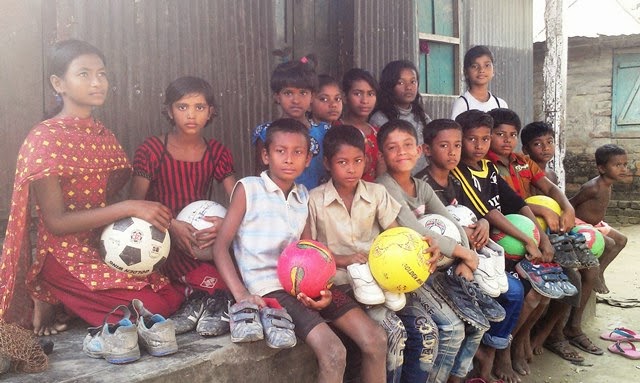
Living on the banks of the Gorai are some of Bangladesh's poorest families. It is from these families that Ahmed recruits the kids who are part of his academy. The parents of these children work as rickshaw pullers, tailors, daily wage labourers, fishmongers, janitors and painters.

Before joining his family business, Ahmed spent six years working as the Media and Communications Officer of the Bangladesh Football Federation and as a Regional Instructor for Football Administration and Management under FIFA. 

"I tried to use my football experience in rest of my life," he says. "Also, I wanted to do something which can bring good for people so [I] started [visiting] the poor area beside our office cum living space at Kushtia. 

"There I found no one playing any proper sport [on] their uneven field, so after observing for some days at their lifestyle, I went to the field with a football to encourage the older youth boys to play football as they couldn't afford a football," he adds.

Started in January 2013, Ahmed's project primarily targets boys and girls between seven and 13 years of age. Having no method to actually gauge how good the kids were, he would use running races to determine how speedy his potential trainees actually were.

Ahmed putting his charges through their paces. He uses the banks of the Gorai river for training them. Reproduced with permission.
"After some days, I announced that girls football will be organized, soon the sporting minded girls came out for play," says the 33-year-old. "After selecting some girls with good running ability, I went to their parents for motivating them to let [them] train with me. 

"Then I also [told] the parents that I [would] also take care of their education by giving them a personal study hour. Inspired by the girls learning the skills fast, I also started to add boys."

Ahmed says that the "main criteria for selecting kids are: poor kids but good at sports. I looked for various companies in the world who are all working in this sector [and] studied all the documents they published. Mainly, the Indian 'Magic Bus' concept inspired me a lot."

"We provide the poor kids with knowledge which are highly desirable benefits of a physically active lifestyle that contribute to competence in lifelong physical activities, attaining social and psychological life skills like interpersonal skills, resistance skills and improving developmental outcomes such as confidence, self-regulation, character, motivation, and perseverance," says Ahmed.

Logistics and training


Because of his association with the Bangladesh Football Federation, Ahmed is well aware that there are no football academies in his country. Football development schools that do exist are present only in name.

"For an academy, land, buildings [and] training facilities are a must," he says.

"The sandy riverside area is the main training facility and the training equipment are from various structures like abandoned half built bamboo house, cement blocks, staircases, cement slopes etc. which also reduces the cost of land, buildings [and] equipment," he explains. 

"All these are made by government and I can use it for free."

It is on these flats that Ahmed and his cousin teach these kids the art of performing stepovers, cuts and feints, as well as the more industrial elements of the game such as shooting, dribbling and tackling.

Because of his tenure in football administration, he has access to a large collection of DVDs which he uses to demonstrate skills to his potential graduates, in addition to performing them himself to show them how it is done.

Ahmed says he thought of developing his football academy in Kushtia after he found people who were enthusiastic about the sport. At first, they couldn't afford a football. Reproduced with permission
"A juice, a pack of biscuit, a boiled egg, and a banana is provided to each of the players after training which cost about $10 per day per head," Ahmed tells me.

"Sports shoes, boots, shorts, jerseys, sports bags, balls, guards etc. are provided step by step on overall progress of each player accordingly where one starts with bare foot and own gears without food. All this equipment is being earned/achieved by each player’s performances in each session.

"In the first month of training, a kid won't get any food or equipment but have to give me various tests to prove his stamina and strength both mentally and physically," explains Ahmed.

"Passing the first month, the kid will get new sports shoes for training. then passing the second month with regular presence in all of our activities she/he will get other equipment by showing progress in football training."

At present, it is his family business, Nandita Properties, that provides him with the funds he requires to procure the food and gear he provides these kids. He soon plans to convert this fledgeling set up into a non government organisation, which will allow him to seek funding from investors throughout the world.

Gaining recognition: his academy's proudest moment


One of the pupils Ahmed helped nurture is now playing for the Kushtia State Team. 13-year-old Nilufa Yeasmin, one of the first children he took into his fold, trained under him for six months before representing her school at a football tournament.

She was named the most skilful player of that tournament.

A month later, the district's selectors came calling. "She told me that there will be a selection at the district stadium, where her school wants to take for a football trial and again, I allowed her to go," says Ahmed.

"Then she got selected by the selectors of the district women footballers," he says.

"That was [the] greatest moment I'd ever enjoyed and [I] felt that my concept had started working," he exclaims.

"[The] reaction of the others at the camp was tremendous. They all became very excited and most importantly, [showed] their willingness to train for getting [into the] district team."


What comes next puts that into even greater perspective. Before the exploits of young Nilufa, Ahmed tells me he'd faced a lot of flak from different areas of society. 

'Why are you wasting your money and time after poor kids?,' they would ask. 'Hey look, a mad man is going who's spending his rich pockets' money,' they would say.

"I used to ask permission to each of the parents before involving the kids in my project. I used to motivate them, describe my purpose to develop the youth in a positive way," he recalls.

"I had to drop out some girls after some days of training for religious & social barriers. It took time [to gain] the confidence of the parents as it was an individual effort then."

That, however, is not the case any more.

"Later on, after project continued for [a] long time, then the parents started to believe in this concept," he continues.

"The parents in each month's feedback session informed [me] that the kids’ food habit increased, sleep time increased, study time increased, [they] became more active participants in their own families and social behaviour had been modified soon after they started training with us. 

"Nowadays, mostly poor girls [with potential] or mothers come to the training place and request [me] to include their kids too." I cannot help but smile as he tells me this.

In addition to just playing the sport, Ahmed makes it compulsory for his young players to devote time to study on a daily basis. Reproduced with permission
It's not just the parents of those he trains who feel this way. His own do too. "They are very excited and [have been] became [very] enthusiastic [about] my project from the very beginning," he says "They have always supported my dreams

"In this project my uncle is the main brainstormer for all success it already has (achieved)," he adds. "Now they have made a commitment to continue supporting this project at a reasonable scale for life."

Long-term plans


In 2014, Ahmed will apply to make his project a non government organisation, opening the doors to funding from various investors throughout the world.

"I will try to spread this concept countrywide through football federation or sports department of our government," he explains.

"After that, I want to make an ideal football academy to support the NGO."

Ahmed says he has good contacts with coaches in his country, so hiring them once he takes the next step in developing his academy will be easy. Because of his time in the administrative world of football, finding local sponsors will also not be a challenge for him.

He also aims to solve several problems that contribute to poverty by promoting an anti-drug attitude, increasing the living standard, empowering women and educating the poor society

"I involve other young kids in the afternoon at the field with various sporting activities which makes them tired," he says. "That prevents their tendency to go out in [the] evening or involve [themselves] in drugs has radically been decreased."

Training and academics aside, Ahmed is also teaching the children social responsibility. See here are the kids repainting sections of a wall. Reproduced with permission
"As the sports training takes out lots of energy, the eating habit of the kids, the habit of early rising and the sense of taking commands from superiors has been radically increased among the kids."          

He plans on improving youth participation in sports for positive development, increasing the standards of fitness and physical ability of youth from poor society and to increase the supply of standard football players specially women both locally & internationally.

"I will take eight years per player to build him/her as an international standard football player for sale to other countries or locally," says Ahmed. 

Ahmed believes in his vision. He also believes it will succeed. "Football is a universal language. All of the football stars in the world are from poor society and poor background. It changed their life," he says.

Related reading: Q&A with Chuck Martini, Head Coach, Muscat Football Academy

Saturday, 23 November 2013

Lack of football dev't in S.Asia due to politics: fmr. Bangladesh Federation employee

A former employee of the Bangladesh Football Federation has said that the lack of development in football in South Asian countries is due to the involvement of politicians in the field of sport.

Ahmed Sayed Al Fatah, who was Media and Communications Manager of the Federation from 2005 to 2011, says that those who run South Asia's organisations do not wish to take advice from either FIFA or the Asian Football Confederation when it comes to developing the game.

Lack of vision and growth


Ahmed Sayed al-Fatah, FIFA Regional
Instructor for Football Administration
and Management
Reproduced with permission
"Football leaders don’t know the way to develop but know only to run the current activities with no vision for the future," says Ahmed, who is now running his own football academy.

"They don’t want to take advice from FIFA or the AFC Because the committees are elected for four years and the election is full of corruption, so it is people below standard who run football. 

"Most of them don’t understand the FIFA and AFC-directed future plans," adds the 33-year-old, who also worked with FIFA as Regional Instructor for Football Administration & Management alongside his job at the BFF. 

During his time with FIFA, Fatah, 33, conducted FIFA-approved courses is India, the Maldives, Pakistan, Indonesia and Malaysia, in addition to his native Bangladesh.

"It had no growth, no job safety, no provident fund, bad management, low salary, bad working environment, no plans, no vision, nothing," says Fatah, referring to his job at the BFF.

Lacking ideas


Former Indian footballer Baichung Bhutia
Image courtesy Ritwik Bose
These words were echoed by former Indian football star Baichung Bhutia, who had stint with English team Bury FC.

“The right people, right professionals need to enter Federations. Right now they are lacking ideas," he was quoted as saying on Goal.com.

Kalyan Chaubey, the academy head of Indian football club Mohun Bagan, agrees with him. 

"I think a lack of international matches [is] a problem and our neighbouring countries Bangladesh, Nepal and Pakistan are not strong enough, so we are not getting competitive matches," Chaubey told CNN.

"[But] the All India Football Federation (AIFF) has restructured their administration and recently money has been pouring into the game, so more windows of opportunity are opening up."

Related Article: Football development in the USA and Middle East shows the sport's popularity