Showing posts with label FIFA World Cup. Show all posts

Thursday, 9 January 2014

I wouldn't trade my World Cup experience for anything, says Chuck Martini

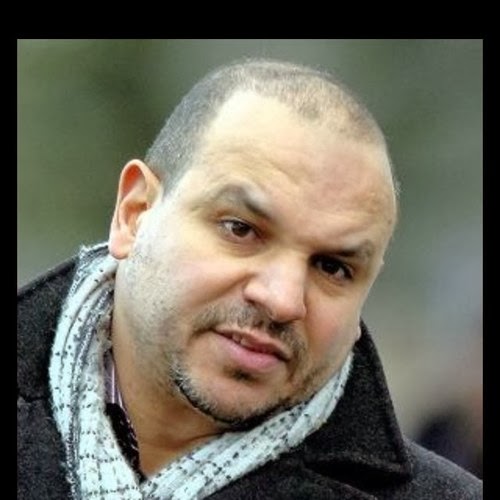
Former Morocco goalkeeper Chuck
Martini.
Image courtesy: Twitter
Former Morocco goalkeeper Chuck Martini says that he would never trade his World Cup experience for anything else in the world.

Martini, who is currently the Head Coach of the Muscat Football Academy in the Sultanate of Oman, was called up to represent Morocco at the 1994 FIFA World Cup held in the United States.

"To see all these stars and to see all these household names competing for the greatest prize in world football, of course it's an honour and a fabulous experience," says Martini, who had stints with Leicester City, Wimbledon AFC and Wycombe Wanderers in the UK.

But despite being at the World Cup in the US, Martini's one regret about his time at the World Cup was that he never got to play in it.

"The only disappointing factor is I didn't get no minutes," he says with a laugh. "I was judging it from the bench. 

"I wouldn't have swapped the world for that experience," he adds. "Obviously I would have loved to have tasted it and playing out there in front of the many thousands and the many millions who were watching it on TV but I wasn't to be and it was never to be in terms of a World Cup. 

Blessed

"I feel blessed that I played professional football, that I was able to represent my national side on a few occasions and it's a massive honour and it's something that I will take to my grave," says Martini, who despite moving to Britain at the age of three, chose to represent his birth nation of Morocco.


Martini received four caps for his country and vividly remembers the emotions associated with his début, a 2-1 win over Gabon.

"I remember how terrified I was," he says. "The reason why I was terrified, I was just thinking 'I'm a
goalkeeper and I just don't want to make a mistake.

"I don't think you feel a sense of pride at the time. You're more nervous about not letting the nation down.

"You don't want to mess up otherwise you don't get the opportunity to play again," he adds. "With a club sort of thing, you can make a mistake, it's only your club.

"But when you make a mistake and it's your country, and people are writing bad things about you, you don't want to picture that."

"I remember, I was nervous until I touched the ball the first time, and then your adrenaline kicks in and it's all about the game," he says.

Club versus Country debate


But despite the honour associated with playing for one's country, the reason clubs are reluctant to let players leave is because they are afraid their players will get injured and hamper their teams.

"Clubs are paying [their] players a fortune and they don't want [them] to go and play in a game that could see [them] get injured, with realistically no real compensation because FIFA rules state that when a national team calls their player(s), they have to go," he explains.

The concern there, he adds is that injuries that players pick up will severely dent a club's hopes of capturing silverware.


"Also, the club look at it from a perspective of business, you know, 'we're paying him so much money, there is no need for him to turn up to an exhibition match'.

"Yes, obviously, [for] World Cup Qualifiers, South American Qualifiers, African Nations Qualifiers, European Qualifiers, fine, but friendlies, they then think 'well no there's no reason for us to be letting our players go, especially our main, core players' and I can understand that," finishes Martini.

"I do not believe the Premier League has any bad managers" - Chuck Martini

Former manager Chuck Martini has said that there are no bad managers in the Premier League as taking over a team in the top-flight of English football requires in-depth knowledge of the game.

Chuck Martini, Head Coach, Muscat
Football Academy
Reproduced with permission
"I do not believe the Premier League has any bad managers. They wouldn't be in that league if they were bad managers," says Martini, who coached Southern League Division One side Godalming Town FC and Ryman Division One team Walton and Hersham FC in the UK.

"They're proven to be managers. People like Mark Hughes who've been sacked in the past, look, every manager will eventually get the sack.

Devastating


"The Premier League is big business," he explains. "The difference between being in the Premier League and being in the Championship, it is absolutely devastating to a football club.

The most recent manager to get the sack was Scotsman Malky Mackay, who was dismissed after a protracted stand-off with Cardiff City owner Vincent Tan during which time he was told to either resign or face the sack by Tan.

Mackay has since been replaced by former Manchester United legend Ole Gunner Solskjaer.


"There are chairmen out there that are footballing people," says Martini, a member of the League Managers' Association.

"I wouldn't consider the Cardiff chairman a footballing person at the moment but he has an idea," opines Martini. "He's probably brought in Solskjaer to be the coach, he's probably loved him as a player at Manchester United.

"It's his money at the end of the day so he's entitled to bring the coach he wants in," says the former Leicester City keeper. "But as [a] manager, I find it devastating that a manager of Malky Mackay's reputation that has taken the club to that height, to be sacked, not given at least one season in the Premier League.

"I feel that's a little bit harsh, regardless of their recent form or recent results."

Unlucky


But while Martini thinks the sacking of Mackay was harsh, he feels Andre Villas-Boas was unlucky to have been sacked as manager of Tottenham Hotspur because of the pressure he was under.

"Villas-Boas for me has been unlucky in a sense that he managed two very top teams in Europe and in England," he explains.

"As a young coach, it was always going to be difficult to deal with personalities like [Didier] Drogba, [Frank] Lampard, [and John] Terry.

"In my opinion, he didn't man-manage them properly because he could've still gotten something out of those players," he adds. "Allow them to lead a little bit more, play to their egos a little bit more, and [get] the best out of them. I think he was very single-minded.

"He wanted to come in and he wanted to change things and he had his own plan and his own direction. I think Villas-Boas' problem was he was impatient because maybe he thinks he's got to come and achieve it straight away."


"People like Alex Ferguson, Arsene Wenger, the wily old ones that people might think are monsters from the past, they understand the game, they understand personalities," says Martini.

"They understand when a player is ready to go and when you can still get the best out of them. They understand the influence that those players have in that dressing room. 

"As a new coach walking into a football club, I've never ever come and changed everything in one go," he recalls. "It's hard, as much as you may think 'this is not the team that I want' but you have to try and be patient."    

Football development in Americas, Middle East shows global nature of the sport, says Chuck Martini

Chuck Martini, Head Coach, Muscat
Football Academy
Reproduced with permission
Former football manager Chuck Martini says football is becoming increasingly popular in areas such as the Middle East and the United States because the sport has gained popularity throughout the world.

At the close of the Major League Soccer season in the United States, the league's total attendance was over six million. 

The Seattle Sounders broke the record for the highest average home attendance in the league: 44,038 fans arrived at their home, CenturyLink Field, every time the Sounders played.

Popularity of soccer

To put that in some perspective, that is higher that any team in Major League Baseball - with the exception of the Los Angeles Dodgers (46,216) - and more than double the average of Seattle's own baseball team, the Seattle Mariners.

That's 3,500 fans more than the average attendance of Premier League side Sunderland AFC, who had an average attendance of 40,544 fans during the 2012-13 season.

Soccer is now the third-most popular sport as far as attendances go, but Martini, who spent time in the States with Major Indoor League Soccer outfit the Dallas Sidekicks, says this growth is not surprising.

"Although baseball and American football are the number one sports in the USA, the number one played sport is actually soccer," says the former goalkeeper.

"It's the number one played sport by boys and girls. There are more boys and girls playing soccer than playing American football and baseball.

"American football is an American game and baseball has always been an American past-time and an American sport so they always get the preference of coverage," adds Martini, who played for Leicester City, Wimbledon AFC and Wycombe Wanderers in the UK.

USA was an eye-opener


"When I first went to America, for me it was an eye-opener," recalls Martini, who was a member of the Morocco football team that played at the 1994 World Cup in the US.

"I was involved in professional sport from a young age in the UK and when I went to America, the level of training, sports science, that was at a total different level to whatever I saw in the UK.

"It was the first time I'd travelled in a private jet. They had this purpose-built plane for the team to travel from one place to another place.

"Sport is big business in America," he explains. "It has always been, so for me, it was a total eye-opener. In terms of professionalism, I still to this date cannot compare them to anybody else because they are at the top, even with the Premier League.

"When all the top players get injured, half of them are going to America to do rehab so it just gives you a little insight into how far developed they are over there," he says.

"Football is global and with these leagues rising, and when people like (David) Beckham, (Juergen) Klinsmann, Thierry Henry and all that lot went over there, it's given it a bit of a profile now."

But while the MLS is reaching new heights in terms of attendance and image, Martini says that clubs in the Middle East have not yet found the formula for success.


Laid-back attitude


Having successfully coached Southern League Division One side Godalming Town FC and Ryman Division One team Walton and Hersham FC in the UK, Martini has now been named head coach of the Muscat Football Academy in the Sultanate of Oman.

In the past, the likes of Gabriel Batistuta, Raul Gonzalez, Fabio Cannavaro and David Trezeguet have all plied their trade in the Middle East but Martini says what is important is that clubs learn to fill out stadiums.

"In the Middle East, it's pretty much a laid back attitude," he explains. "They'd rather sit at home and watch it on TV whereas in Europe, people love going to the game.

"The problem [is] that they still haven't found a formula to that success [which] is getting bums on seats in the stadium," he adds.

The heat does play a part I guess because it's pretty hot all year round and people don't want to go out and feel the extreme heat half of the time."

Having now moved to Oman, Martini has also been appointed Technical Director of Saham Football Club.

Fill stadiums


"The one thing that they are trying to promote is to put bums on seats, is to play in their own purpose-built stadiums" he says. "If you look at the professional league in Oman, they're playing in all the major stadiums, but they're not playing at home.

"You might be from a little town like Saham, but if you've got the whole town supporting the club and coming out, like they do back home in the UK, if you have that integration between your town and the local football club, there's only one way and it's up."

Chuck Martini during his time with Waltham and Hersham FC in the UK. Image courtesy Muscat Football Academy
Martini says he's been to several football games in Oman during his time in the Gulf. "I go and I see an empty stadium," he explains. "I'd rather be in a smaller stadium where I've got 2,000 fans making noise than be in a massive stadium the size of Wembley and 2,000 people watching it."

"If they keep playing in empty stadiums, there's no real passion, there's no real sense of 'we're playing at home today.' Every game is an away game.  

"I think they (the clubs) need to stick to the town mentality: local club, local team and then let it grow to drum up interest within your own areas," he advises. "I think that's the only way that they will succeed."

This mode of success is possible, he says, because apart from the passion that people in the Middle East show towards football, there is plenty of money to invest in the sport.

"I think their infrastructure is sound," says Martini on the provisions for the development of football in the Middle East. "The investment is there and players will go where the money is and in terms of the Gulf, money is not something that is lacking".

Wednesday, 8 January 2014

Q&A session with Chuck Martini, Head Coach, Muscat Football Academy

Chuck Martini, Head Coach, Muscat
Football Academy
Reproduced with permission
With the Muscat Football Academy hosting its first training session last Tuesday, I sat down with Head Coach Chuck Martini to discuss the idea behind setting up this academy and his coaching philosophy.

Run by the Al Jarwani Group, Mr. Martini has joined the Academy after managing several English sides including Southern League Division One side Godalming Town FC and Ryman Division One team Walton and Hersham FC,

He was also youth academy coach at Wimbledon AFC. 

Of Moroccan extraction, Mr. Martini was a goalkeeper for Leicester City, having played for them from 1999 to 2001.

He also had stints at Kings Lynn FC, Wycombe Wanderers and Major League Indoor Soccer outfit Dallas Sidekicks. He represented his country on four occasions.

When did the idea for this academy come up?

The plans were drawn up a year ago, exactly to the date (of the interview). I know the Al Jarwani Group and from past experiences when I was a youngster playing professional football, one of the brothers of Sheikh Al Jarwani was studying in the UK so we formed a relationship and kept in touch ever since.

They wanted to open a football academy, similar to Aspire which is in Qatar so I flew out. It was last year, December, and we discussed it, we came up with a few plans and we pretty much signed on the dotted line that it was going to happen.

At that particular time it was due to happen [in] March but there was some red tape that we had to go through.

Getting approval from the Sports Ministry, the Football Association took a little bit of time. I was still managing at the time in the UK, I was managing a club in the Conference Division so I resigned from my post as the manager of the club in February obviously thinking it was going to take place in March.

As things sometimes do, they take a lot of time and I eventually got out here August 19th. We had all the approvals and everything in place.

Related article: Football progress in the Middle East and Americas shows game's global presence

When do you hope to formally start training?

We've actually started. We have 60 students in our academy now. The academy has two different sectors. You have what we would call the elite sector. That won't be up and running until we build our own purpose-built academy. That is in the planning now, it's going to come up somewhere around Mawaleh.

It will be the first professional football academy in Oman. There's never been something like this in Oman and there isn't something like this now, so when we do build our facilities, it will be something to be reckoned with because we will have state-of-the-art facilities.

Our aim is to develop and take players to the next stage and that is professionalism and pushing players to international youth level.

Also, we will have a curriculum where it'll be sports studies in case players don't make the grade as footballers, they have a chance to learn the other side of it, whether its coaching or being involved in the sports industry in some kind of manner.

For now, we're in partnership with a famous school in Muscat. It's called Azzan bin Qais international school We're using their facilities. They have an eight-a-side 4G pitch, swimming pool and an indoor area where we will use in the hot summer months.  

What age groups do you have and what do you teach those different age groups?

We take kids from four years old up to the age of 18. It's pretty much basic training, fundamentals, technique. Also, part of our courses we run, we have a theory side to it as well. We teach them about nutrition, healthy living, but it's very much introduction to playing football the correct way.

A lot of the kids that we've got have been taught to play street football.

You know, go out there's a ball and kick it around. We're trying to organise them a little bit more, understand position, understand roles and the responsibility within every position.

It is pretty much going back to the basics and then developing them that way: trying to build their confidence in ball manipulation, in communication, in understanding different formations. 

When people sign up with our academy, it's for a year and we also train them three times a week because that's the only way we believe we can get the information through to them and it's the only way we'll see improvement.

At what age do you come to know what position a child is suited for?

Good question! We like to try and mould players into playing different positions, into understanding different roles. But me, as a head coach, of course I want a centre forward to stand out, of course I want a creative central midfielder to stand out, of course I want to build a good centre back.

Probably, at the age of 12, 13, 14, you kinda start thinking 'well this person, you can maybe mould him into this kind of player and mould him into this kind of position' but I've known players who've played as a defender until the ages of 18, 19, 20 and all of a sudden, they've been converted into strikers.


I think from a young age you can tell [apart] goalscorers, people who've got that eye for a goal and they've got that predatory instinct of being in the right place at the right time to score a goal. Those kind of positions are easier to discover.

I think midfield, wingers, defenders, especially now, the way football is evolving, different systems that allow defenders to be attacking players. It's pretty much tricky at that time. 

The obvious position other than that is goalkeepers. I think goalkeeper is a specialised position, I sometimes think you have to be born as a goalkeeper and I am an ex-goalkeeper.

I think your hand-eye coordination has to be very good from a young age so that we can develop them into what we hope to be outstanding goalkeepers. People say you've to be mad to be a goalkeeper: diving at people's feet and stuff like that. There's a level of bravery required.

What do you teach kids about fair play and respecting your opponents?

Funny enough you should say that. My first speech when we had an induction was team spirit and that was [to] be supportive to every team member, regardless [of] whether they make a mistake that causes you to lose the game.

[You] must be supportive to one another. I don't believe in team spirit of fighting each other and cussing each other. I believe in encouragement.

I believe in fair play. You must play by the rules. Good question you brought up but it only happened to be part of my first speech when I was making the introduction. I've always said to the players - especially at a younger level - that for me, the result doesn't matter.

We all want to win football matches, of course, they feel happy when they've won but it's not as cut-throat at is it when you're coaching professionally, when you need that result.

Related article: The Premier League has no bad managers

At a younger level I want them to enjoy the game, enjoy participating in it. If we were beaten by the better team, it means they were the better team on the day. It doesn't mean they are the better team, period.

We're going to have good days, we going to have bad days, but its about being together and sticking together and adhering to the rules of the game. I've always been a person that advocates fair play.

What comes after a player finishes at the academy?

When they've reached the ages of 18, we'd like to believe that we've developed them enough, that they're extremely talented, we will push them out to places in Europe to see whether they can fulfil their dream of becoming a professional footballer.

We have various markets that we can send them to, whether it's Europe, whether it's America or whether it's the Gulf market.

Once they've been through a rigorous programme that we've put, and especially a residential programme that we're going to have in place, then we'd like to believe that they're at that that stage where the next level will be professionalism.

There's other avenues as well. I've just formed an alliance with a Canadian university where if they want to continue their education via scholarships and play football in the States or in Canada.

When the concept was given to me and I was asked to be the head of it all, these were concepts I felt have to be in place before anything else can be done.

When they do leave our school, when they do leave our programmes, then there has to be something [for what] their parents have invested in them all through this time.

Related article: Oman to have Middle East's first sports science course

How do you convince kids to play efficiently?

My first briefing to the coaches was 'I want players to express themselves'. I want players to play with freedom. Street football - believe it or not - has probably formed some of the best players in the world, so I would not for one minute want to stop that.

The one thing I want to coach is the correct way of doing things. When you see it done wrong, then it is your obligation as a coach to the student, to the trainee, to teach them how to do it properly.

It's the end product that matters. I've had players that can beat five players and their end product is absolutely rubbish because their shot on goal is nothing, is not a correct shot, or their final ball is not the right ball.

So I put them in and I say to them 'well okay, you've done that fantastically well but what is the final thing that you've done?'.

Chuck Martini during his time with Waltham and Hersham FC in the UK. Picture Courtesy Muscat Football Academy
In order to become a better player, in order to become a player that coaches [and] scouts will take notice of, they don't look at what you've done there. They look at your end product. And what is your end product?

Your end product is that you gave the ball away, your end product is your shot wasn't good enough, your cross wasn't good enough. And therefore, they'll say 'sorry, not good enough'.


It is [about] teaching and coaching children to feel free to express themselves. I don't want to chain them. I don't want to say 'no, you're robots, you can only do this'.

This is a new challenge for me, teaching kids, but I was a kid myself. I've played through all the levels. I know how to develop players, I have an eye for players, I know what it will take to form a player and I want those methods of my experience applied to this academy.

For us, it is freedom of expression, go out there and try. The secret is, if you fail, try. Try and try again. Practise makes perfect.

I've always been someone that believes that enjoyment will create growth. Practise will create excellence.

Related Reading: Following in the steps of Bangladesh's first football academy